
The Growing of a Shared Garden
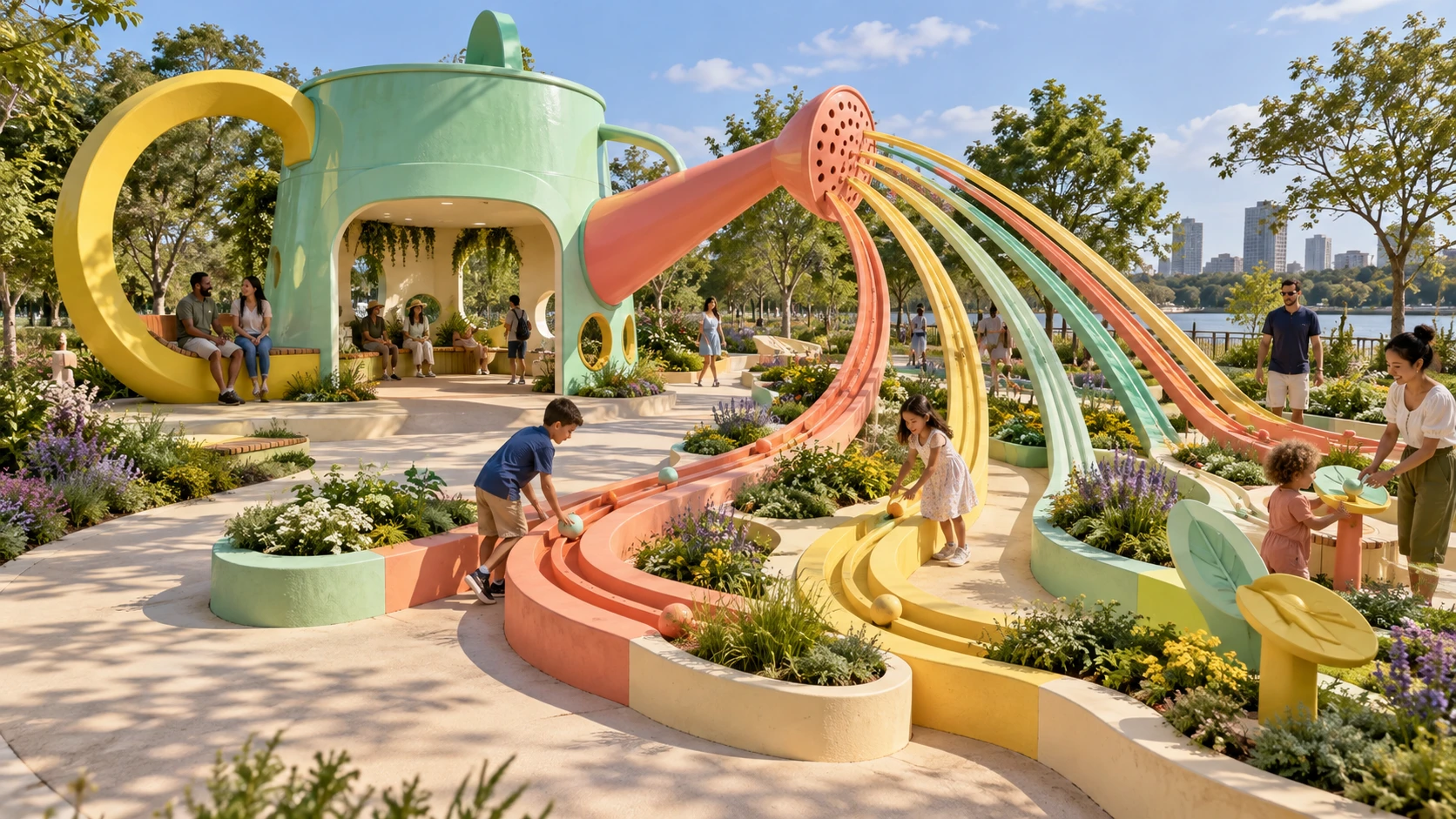
A watering can sends coloured ribbons into a planted landscape, giving the outward gesture of care a public form through paths and seats.
The Brief
The watering can establishes a relationship between a source and the things it sustains. The brief makes that relationship visible through a garden whose paths and seats extend along the spreading pour.
Visitors move between the source and the spreading garden, enter the open body or settle into a handle-derived seat.
The Inspiration
A watering can gives a simple action a visible direction: care leaves its source and reaches something that can grow. This relationship inspires a garden where small connected gestures accumulate into a generous space for others.
A mint vessel sends coloured ribbons outward from a coral rose.
The Concept
A mint vessel sends coloured ribbons outward from a coral rose. The spreading curves connect planted pockets, routes and seats, while the open body and handle offer further places to enter or rest within the recognisable silhouette.
An elevated view reveals the complete arrangement of the landmark, its seating and the routes around it.
The Experience
Visitors move between the source and the spreading garden, enter the open body or settle into a handle-derived seat. Tactile details at the edges encourage shared attention, linking participation with the calmer experience of spending time beside planting.
A small watering interaction sits beside the larger watering-can landmark, connecting its recognisable form with the garden.
The Outcome
Care becomes a visible relationship between a source and a growing garden. The vessel and spreading ribbons bring routes, planted pockets and places to sit into one connected composition, making tending and togetherness part of the same story.
The reverse view reveals the same structure’s layered edges, material surfaces and relationship to its setting.